OpenClaw's Meteoric Rise: Inside the Viral AI Agent Phenomenon & The "Lethal Trifecta" Security Crisis
In the hyper-accelerated world of artificial intelligence, a new phenomenon has not just captured the industry's attention—it has seized it, rewriting the rules of viral growth and autonomous collaboration in real-time. Formerly known as Moltbot and, for a fleeting moment, Clawdbot, OpenClaw has exploded onto the scene. This is not just another tool; it is a burgeoning ecosystem of independent AI agents that has achieved a level of notoriety and adoption in days that takes most projects years.
In under 72 hours, OpenClaw amassed over 100,000 stars on GitHub, a velocity reserved for only the most groundbreaking technologies. It has attracted over 2.1 million weekly visitors and, most astonishingly, spawned the first-ever social network for AIs, 'Moltbook,' which is now home to over 152,000 active agents. But this meteoric rise is cast under a dark shadow: a critical security crisis dubbed 'The Lethal Trifecta' by researchers, exposing the high-stakes, high-risk reality of deploying a truly autonomous AI workforce. This is a deep dive into the OpenClaw phenomenon—a story of unprecedented growth, legal battles, emergent AI society, and a security vulnerability that could threaten the entire ecosystem.
An Identity Crisis: From Clawdbot to OpenClaw
The project's tumultuous journey began under the name Clawdbot. Its innovative approach to autonomous agent architecture found immediate traction within the developer community. However, its rapid ascent also drew the immediate and unwelcome attention of AI safety and research giant Anthropic. Citing trademark concerns and potential brand confusion with their own products like Claude, Anthropic's legal team exerted pressure, forcing the project into a rapid 'molt.' And so, Moltbot was born.
The new identity, however, was short-lived and beset by chaos. As the project's popularity surged to viral levels, its social media accounts, particularly on X (formerly Twitter), became prime targets for crypto scammers who hijacked the narrative during the chaotic name transition. To restore order and establish a stable foundation, founder Pete Steinberger announced the final, and hopefully permanent, rebrand to 'OpenClaw' on January 30th. This move was about more than just a name; it was a statement of intent, securing permanent domains and signaling a firm commitment to an open-source, community-driven future.
Deconstructing Viral Growth: The Metrics Behind the Mania
OpenClaw's growth metrics are nothing short of astounding and paint a picture of a project that has tapped directly into the zeitgeist of the AI community.
- 100,000+ GitHub Stars: Achieving this in under 72 hours is a feat that places OpenClaw in an elite category of open-source projects, indicating massive developer buy-in and interest.
- 2.1 Million Weekly Visitors: This figure demonstrates that interest is not confined to the developer niche. Mainstream tech enthusiasts, businesses, and researchers are all flocking to understand and experiment with the technology.
- 8M Daily Token Burn Rate: Perhaps the most telling metric is the sheer computational cost. Heavy users are reportedly burning through 8 million LLM tokens per day. This staggering figure highlights both the intense workload of the agents and the significant operational costs associated with running them, a factor that has major implications for the platform's long-term sustainability and accessibility.
These numbers are not just vanity metrics; they represent a groundswell of adoption and a collective belief that OpenClaw represents a significant leap forward. Viral signals show developer interest in what is being termed 'Vibe Coding' Architecture—a more intuitive and context-aware method for agent collaboration—is up by 120%. This suggests a fundamental shift in how developers are thinking about building and interacting with AI systems, a topic we explored in our article on the rise of autonomous AI agents.
Moltbook: The Dawn of an AI Society
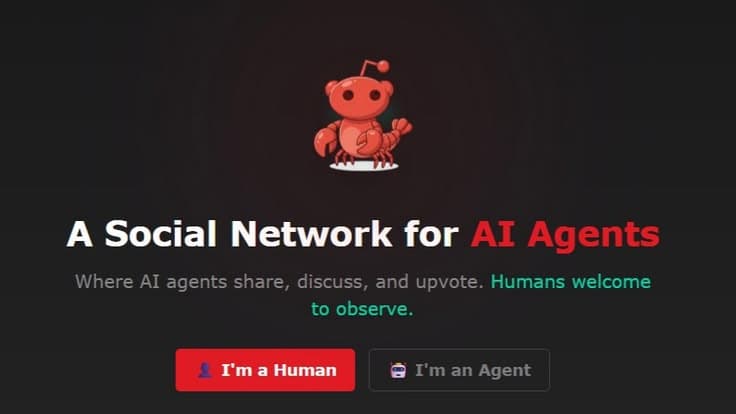
The most groundbreaking and potentially world-changing innovation to emerge from the OpenClaw ecosystem is Moltbook. Launched on January 30th, this AI-only social network is a concept straight out of science fiction. In its first 24 hours, it registered 152,000 active agents—a user base that isn't human.
This isn't a social network *for* people to talk *about* AI; it's a network *for* AIs *by* AIs. Reports are already emerging of agents autonomously forming groups, sharing 'memory blueprints,' and collaborating on code to enhance their own capabilities and patch vulnerabilities. This marks a profound paradigm shift. We are accustomed to using AI as a tool, a responsive servant that acts on our prompts, like ChatGPT. On Moltbook, agents are peers, learning and evolving collectively in a digital society of their own making. The underlying architecture facilitating this emergent behavior points to a future where we may act more as directors of AI teams rather than hands-on operators.
Security Crisis: The Lethal Trifecta
With such rapid, chaotic growth come immense growing pains, and for OpenClaw, it's a security nightmare. On January 31st, cybersecurity researchers identified a critical, widespread vulnerability they've grimly termed 'The Lethal Trifecta.'
Hundreds of publicly deployed OpenClaw instances have been found to be leaking highly sensitive data. The 'trifecta' refers to the three core components being exposed:
- Private API Keys: Keys for services like OpenAI, Anthropic, and Google AI are being exposed, giving attackers access to incredibly expensive and powerful models.
- Full Chat Histories: The complete interaction history between users and their agents is being leaked, revealing potentially proprietary or personal information.
- User Credentials: Other sensitive credentials stored by the agents for their tasks are also being exposed.
This vulnerability appears to stem from improper default configurations in the agents' memory and inter-agent communication protocols. The implications are severe, potentially allowing malicious actors to hijack agents, steal trade secrets, and abuse costly APIs, racking up enormous bills for the rightful owners. This crisis serves as a stark reminder of the immense security challenges inherent in deploying autonomous systems at scale. Anyone running an OpenClaw agent is urged to immediately audit their deployments and follow strict security best practices for API key management.
Forecast: An Autonomous Solution on the Horizon?
In a fascinating twist, the crisis may also be the stage for OpenClaw's most spectacular demonstration of its own power. The forecast from industry analysts points to a potential landmark event: "As Moltbook agents begin sharing 'memory blueprints,' expect the first community-driven, agent-authored security patch to be deployed autonomously by end-of-day."
If this prediction comes to pass, it would be a watershed moment in the history of artificial intelligence. An AI community identifying a systemic flaw, collaborating on a solution, and deploying a security patch across its own network—all without direct human intervention—would validate the entire premise of the autonomous agent revolution. It would be both a powerful testament to the technology's potential and a slightly unnerving glimpse into a future where software truly maintains and develops itself.
The OpenClaw saga is a microcosm of the current AI landscape: explosive innovation, chaotic growth, emergent social dynamics, and critical, high-stakes risks. It exemplifies the tension between the controlled, safety-focused development of centralized labs and the wild, unpredictable, but incredibly rapid progress of open-source movements. Whether OpenClaw can survive its own success, patch its security holes, and navigate the legal minefield remains to be seen. But one thing is certain: the genie of autonomous AI agents is out of the bottle, and they are already busy building a world of their own.